🚐 RV Worry Free🦅 Guide to Dinghy & Towing in 2026. Tow Smarter.

Travel Freely. Stay Fully Protected.
Start With Protection — Because Towing Is Only Half the Story
Knowing how to dinghy tow, what vehicles can be flat towed, and what equipment to use is critical. But just as important — and often overlooked — is knowing whether your protection plan actually covers both vehicles involved.
That’s where RV Worry Free🦅 goes above and beyond.
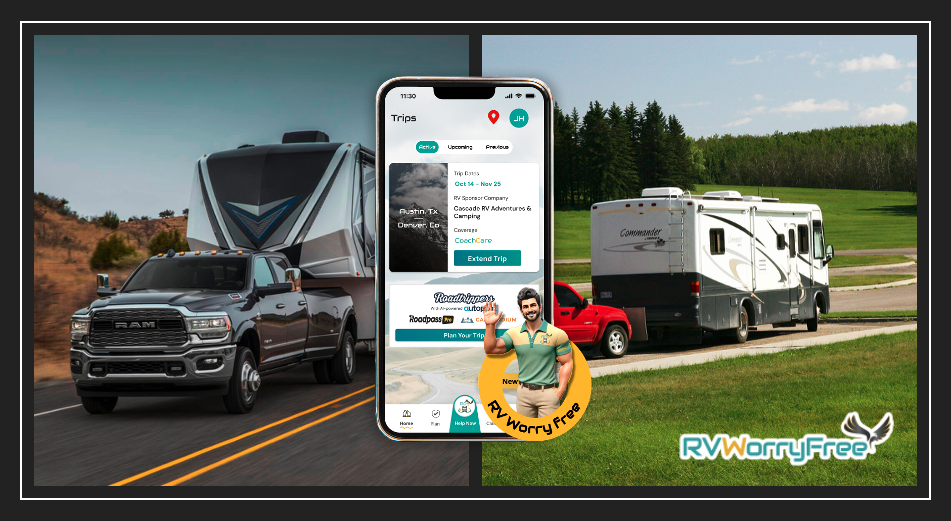
Unlike traditional RV-only plans, RV Worry Free protection products are designed to cover:
- ✅ The RV doing the towing
- ✅ The vehicle being towed (your “toad”)
- ✅ Or the vehicle towing an RV
Because when you’re connected on the road, your risk is connected too.
What Is Dinghy Towing?
Dinghy towing (also called flat towing) allows you to tow a secondary vehicle behind your motorhome with all four wheels on the ground. RVers love it because it’s:
- Fast to connect and disconnect
- Easy to use once set up
- Perfect for sightseeing and errands after you’re parked
⚠️ Important: Not every vehicle can be dinghy towed. Always consult the owner’s manual. If the manufacturer doesn’t explicitly approve flat towing, drivetrain damage — often not covered by warranty — can occur.
Why Dinghy Towing Is Often the Best Choice
There are three main towing methods:
- Trailer towing – vehicle fully on a trailer
- Dolly towing – front wheels off the ground
- Dinghy towing – all four wheels on the road
Many RVers prefer dinghy towing because:
- Less equipment after initial setup
- Faster hookup and teardown
- Less storage space at camp
And with RV Worry Free, you’re not just saving time — you’re protecting both sides of the tow.
Confirm Your Motorhome’s Towing Capacity (Don’t Skip This)
Before towing, confirm:
- Tow rating
- GCWR (Gross Combination Weight Rating)
Your GCWR includes:
- The RV
- Cargo, passengers, fluids
- The towed vehicle
- Accessories like braking systems
Exceeding limits can lead to:
- Poor handling
- Longer braking distances
- Mechanical failures
And without proper protection, those failures can get expensive — fast.
Choosing a Dinghy-Towable Vehicle in 2026
Vehicle drivetrains change constantly. A model that was towable last year might not be this year.
Always confirm using the owner’s manual, specifically sections labeled:
- Recreational Towing
- Flat Towing
- Dinghy Towing
Some vehicles require:
- Speed or distance limits
- Pre-tow procedures
- Periodic engine run times
If it’s not approved, don’t risk it — and don’t assume coverage without checking your protection plan.
2026 Manufacturer-Approved Dinghy Vehicles (Snapshot)
This year’s approved vehicles include select models from:
- Buick
- Cadillac
- Chevrolet
- Dodge
- Ford
- GMC
- Jeep
- Lincoln
- Nissan
- RAM
⚠️ Approval often depends on drivetrain configuration, transfer case, and transmission type. Always verify your exact trim and model year.
Required Equipment for Safe Dinghy Towing
A proper setup includes:
- Base plate (vehicle-specific)
- Tow bar (rated for weight)
- Safety cables or chains (legally required)
- Auxiliary braking system (required in most states)
- Breakaway switch
- Signal light wiring or wireless lights
- Optional rock guards for debris protection
Skipping any of these can create safety risks — and coverage gaps.
Common Dinghy Towing Mistakes to Avoid
- ❌ Towing a non-approved vehicle
- ❌ Skipping auxiliary brakes
- ❌ Exceeding weight limits
- ❌ Ignoring manufacturer procedures
- ❌ Assuming “it’ll probably be fine”
One mistake can result in thousands of dollars in damage — especially without the right protection.
Dinghy Towing Adds Freedom — RV Worry Free Adds Confidence
Dinghy towing lets you explore more without breaking down camp.
RV Worry Free ensures you’re protected while doing it.
Our protection products don’t stop at the RV — we protect:
- The RV
- The vehicle towing
- The vehicle being towed
So no matter how your adventure is connected, your protection is too.
👉 Want total peace of mind on the road?
Tow smart. Tow covered. Travel RV Worry Free🦅.