Rentals Aren’t the Side Business. They’re the Gateway.

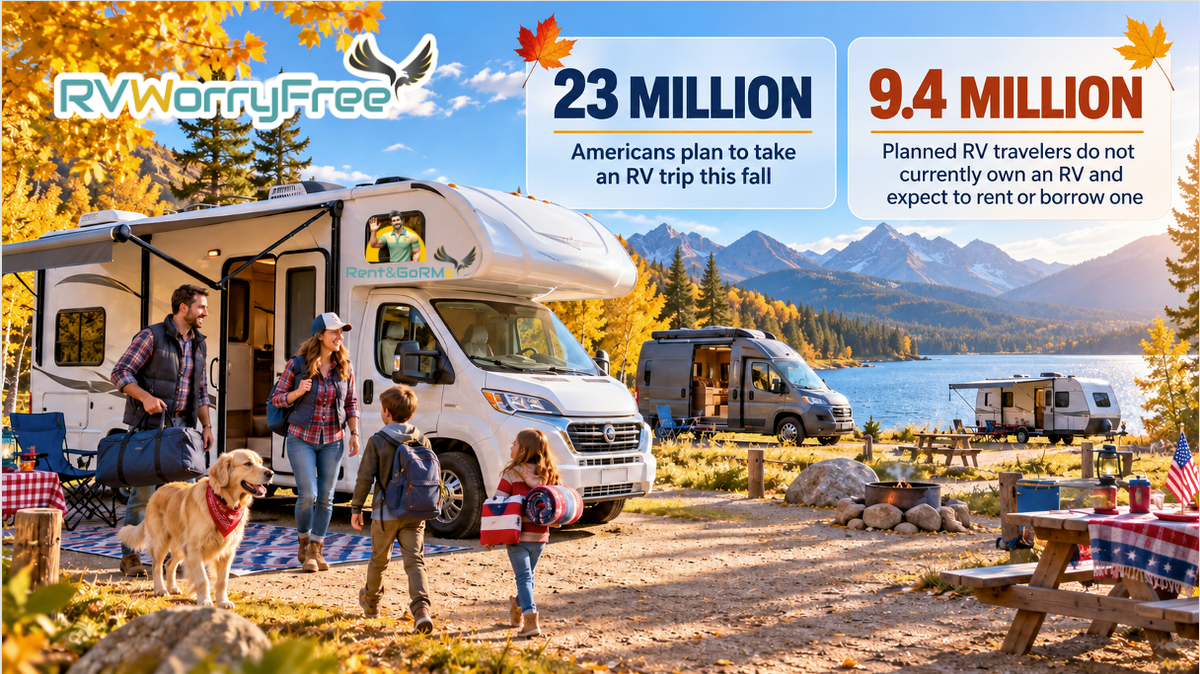
Labor Day 2026 offers another clear signal that the way consumers access RVs—and other motorized assets—is changing.
For decades, much of the RV industry has been organized around one primary transaction:
Sell the RV.
But consumer behavior is changing.
Labor Day 2026 gave the industry another strong reminder.
More than 11 million Americans planned to take an RV trip over Labor Day weekend, according to the RV Industry Association. Looking beyond the holiday, approximately 23 million Americans plan to take an RV trip this fall.
Perhaps the most important number, however, is this:
More than 9.4 million Americans who do not currently own an RV plan to rent or borrow one this fall. (RVIA)
Those consumers are not outside the RV market.
They are already entering it.
They simply haven't purchased the asset yet.
And that distinction may become increasingly important for RV dealers, professional rental companies, manufacturers, campgrounds, fleet operators and the broader motorized rental industry.
Because ownership is no longer the only entrance into a market.
Increasingly, access comes first.
Labor Day Reinforced the Demand for Experiences
The trend extends well beyond RV-specific travel.
HomeToGo reported that searches for Labor Day 2026 trips increased 23% year over year, while an extraordinary 90% of searches were for rural destinations. Domestic destinations accounted for 65% of searches, increasing 13.5% compared with 2025.
The destinations showing some of the strongest interest were not simply major cities.
Travelers were searching for waterfront communities, mountain regions, national-park gateways and smaller outdoor destinations. (HomeToGo)
AAA's Labor Day travel data showed similar interest in road trips, national parks and experience-based travel, with destinations such as Denver and Las Vegas serving as gateways to major outdoor attractions. (AAA Newsroom)
And travelers were doing this despite a significant economic headwind.
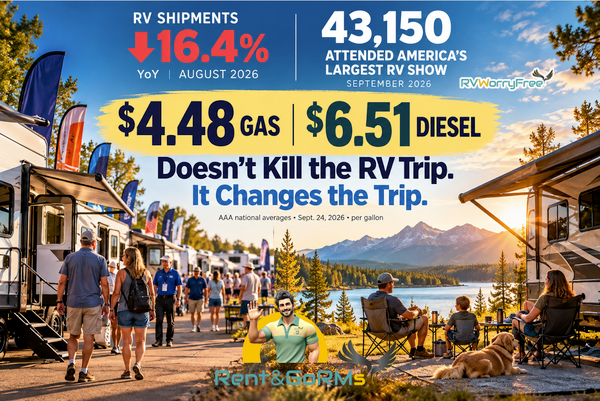
Immediately before Labor Day, AAA reported a national gasoline average of approximately $4.14 per gallon—the highest national average ever recorded around the Labor Day holiday. (AAA Newsroom)
Consumers continued traveling.
They adjusted how and where they traveled.
That matters.
Because RV travel sits directly at the intersection of several of these behaviors:
road travel, outdoor experiences, flexibility, family travel and control over the travel environment.
Camping Is Not a Small Market
The camping economy itself has become substantial.
KOA's 2026 Camping & Outdoor Hospitality Report found that more than 52 million North American households camped during 2025, exceeding pre-pandemic participation levels.
Those campers created an estimated $66 billion economic footprint. (KOA)
That means there is already an enormous consumer base interested in outdoor travel.
But participating in camping does not automatically mean a consumer is ready to purchase an RV.
For many families, ownership may not make financial or practical sense yet.
They may camp twice a year.
They may not have storage.
They may not know which type of RV fits them.
They may not want the maintenance responsibility.
They may not be comfortable financing an expensive recreational asset.
Or they may simply want to experience RV travel before making a major purchase.
That does not make them a bad RV customer.
It makes them a rental customer first.
Professional RV Rental Is Already Showing Strength
Professional rental operators were seeing healthy demand heading into the 2026 travel season.
The RV Rental Association reported that nearly 60% of surveyed rental operators had more April reservations booked than during the same period the previous year.
Only 21% reported fewer early reservations.
The survey also showed that three-to-six-night trips dominate professional RV rental demand, with 48% of operators reporting five-to-six-night rentals as their most common duration and another 43% reporting three-to-four-night rentals. (RVDA)
These are not people borrowing an RV for an afternoon.
They are taking trips.
They are learning how the products work.
They are experiencing different floorplans.
They are discovering what they like—and what they don't.
And every one of those experiences has potential value far beyond the initial rental transaction.
Automotive Already Showed Us What Happens When Access Expands
The RV industry does not have to guess what happens when consumers are given more ways to access an expensive motorized asset.
Automotive already went through it.
There was a time when the normal consumer path to a new automobile was simple:
Buy it.
Leasing existed, but it was relatively uncommon.
Then the economics of vehicle ownership began changing and consumers started looking for different ways to access newer vehicles.
In the late 1980s, retail leasing was still a relatively small portion of the market.
By 1987, leases accounted for roughly 12% to 14% of individual new-car transactions, depending on the dataset being used.
By 1992, leases were already approaching one-quarter of individual new-car sales. (Los Angeles Times)
By 1993, approximately one in four retail cars acquired by individuals was leased. (Los Angeles Times)
And by the mid-1990s, leasing had climbed to roughly 30% or more of new-car activity in several industry measurements. (Los Angeles Times)
It became a mainstream way to access an automobile.
And it remains one today.
According to Experian, 24.1% of new vehicles were leased during the first quarter of 2026.
That means roughly one out of every four new vehicles is still accessed through leasing rather than a traditional purchase or loan transaction. (Experian)
The lesson is important.
Automotive did not respond to alternative access models by insisting:
"If you're not ready to own the car, you're not our customer."
The industry built products around the consumer.
Purchase.
Finance.
Lease.
Daily rental.
Long-term rental.
Subscription-style access.
And eventually peer-to-peer platforms.
Turo alone facilitated 5.5 million U.S. trips representing 26.6 million trip days during 2025, generating approximately $1.4 billion in earnings for hosts. (Turo)
And this change in consumer thinking is continuing.
In Turo's 2026 national consumer study, 53% of Americans said they want more flexible ways to pay for and access vehicles, while 51% said automobile ownership requires financial sacrifice. (Turo)
Automobiles are still purchased every day.
Ownership did not disappear.
What changed was the number of ways consumers could enter the market.
That is the opportunity facing RVs today.
Rental Does Not Compete With Ownership. It Can Create the Path Toward It.
There is an important distinction here.
Not every renter will become an RV owner.
And the industry should not pretend otherwise.
Some consumers may rent forever.
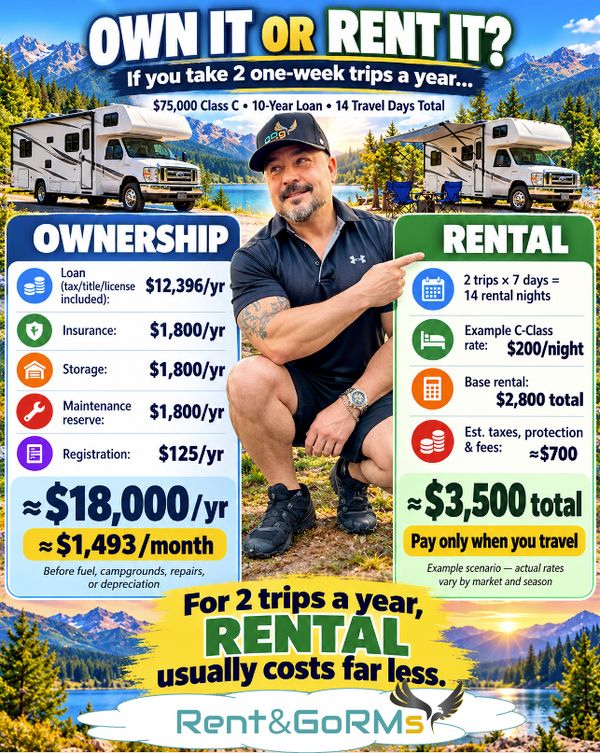
For someone who takes one or two RV trips each year, that may be the rational financial decision.
But that does not weaken the rental argument.
It strengthens it.
Without rental, that consumer may generate virtually no economic activity for an RV dealer.
With rental, that same customer can become part of the industry immediately.
And for consumers who may eventually buy, rental provides something that a showroom cannot.
You do not fully understand an RV by walking through one for 20 minutes.
You understand it when you:
Drive it.
Pack it.
Sleep in it.
Cook in it.
Set it up.
Travel with your children.
Take your dog.
Use the bathroom.
Manage the storage.
Experience the floorplan.
And live with the RV for five or six days.
That is a fundamentally different customer experience.
Rental allows consumers to learn what they actually want before making a major financial commitment.
The Emerging Customer Funnel Looks Different
Historically, the RV industry's customer path often looked something like this:
Advertising → Dealership → Purchase → Camping
The emerging model can look very different:
Travel inspiration → Rental → Camping experience → Repeat rental → Product preference → Ownership consideration → Purchase
That additional front end of the funnel matters.
The consumer may rent a Class C this year.
Try a campervan next year.
Rent a travel trailer with their family.
Discover that they prefer a particular layout.
Become familiar with a manufacturer.
And eventually decide that ownership fits their lifestyle.
At that point, the company that facilitated those rentals has something extraordinarily valuable:
an existing customer relationship.
They may already know:
- what type of RV the customer prefers,
- how frequently they travel,
- what size unit they use,
- what destinations interest them,
- what products they purchased,
- and when their travel frequency begins to justify ownership.
That is a much warmer opportunity than another anonymous internet lead.
RV Dealers May Be Uniquely Positioned to Capture This Customer
Consider what already exists inside many RV dealerships.
Inventory.
Service departments.
Technicians.
Parts.
Detailing.
Parking.
Customer support.
Sales staff.
F&I expertise.
Marketing infrastructure.
Local brand awareness.
Used-RV disposition channels.
Much of the operating infrastructure required to support a professional rental fleet already exists.
That means rental does not necessarily have to operate as a disconnected side business.
It can become another part of the customer lifecycle.
A rental unit can generate revenue before its eventual retail sale.
A renter can purchase protection and ancillary products.
The customer can return for another trip.
They can try another unit.
They can refer friends.
They can eventually purchase.
And when fleet units are rotated out of service, the dealership already has the infrastructure to merchandise and resell them.
Look at that customer lifecycle differently:
Rental → Protection Products → Ancillaries → Repeat Rental → Service Interaction → Ownership → Trade Cycle
That looks far more like a traditional automotive dealership revenue model than a side hustle.
Professional Fleet Operators Will Become Increasingly Important
As more first-time consumers enter RV travel through rental, professional operations matter.
A first-time renter does not simply need a set of keys.
They may need someone to explain:
How shore power works.
How to operate a generator.
What to do when a battery dies.
How to extend a slide.
How leveling works.
What happens if a tire fails.
What a warning light means.
Where to call if something breaks.
And what to do when they are hundreds of miles from the rental location.
That first experience can influence whether someone ever rents again.
It can also influence whether they eventually buy.
A bad first RV experience can turn someone away from the category.
A great experience can create another RV enthusiast.
That makes the professional rental operator—and the infrastructure supporting that operator—more important, not less important, as the market grows.
This Is Bigger Than RV
The same economic and consumer behavior extends across the motorized rental economy.
Marine.
Powersports.
Motorcycles.
ATVs.
Side-by-sides.
Trailers.
Specialty vehicles.
Commercial vehicles.
Even automotive itself.
The underlying consumer question is increasingly becoming:
"Do I need to own this asset to receive the value I want from it?"
Sometimes the answer is yes.
Sometimes the answer is no.
And sometimes the answer is:
Not yet.
That "not yet" consumer may represent one of the largest opportunities in the motorized asset industry.
Because access allows companies to monetize the relationship today while keeping ownership available tomorrow.
But Rental Has to Become More Professional
There is one major challenge.
As rental becomes a meaningful distribution channel, the infrastructure behind it must mature.
A professional motorized rental business needs more than a calendar and a credit-card processor.
It requires:
Booking management.
Fleet availability.
Digital payments.
Rental agreements.
Customer verification.
Driver verification.
Check-in and checkout.
Vehicle-condition documentation.
Protection products.
Insurance integration.
Claims management.
Roadside assistance.
Technical support.
Maintenance visibility.
Mobile lot operations.
Customer communication.
Ancillary products.
Reporting.
And tools that allow the operator to retain ownership of the customer relationship.
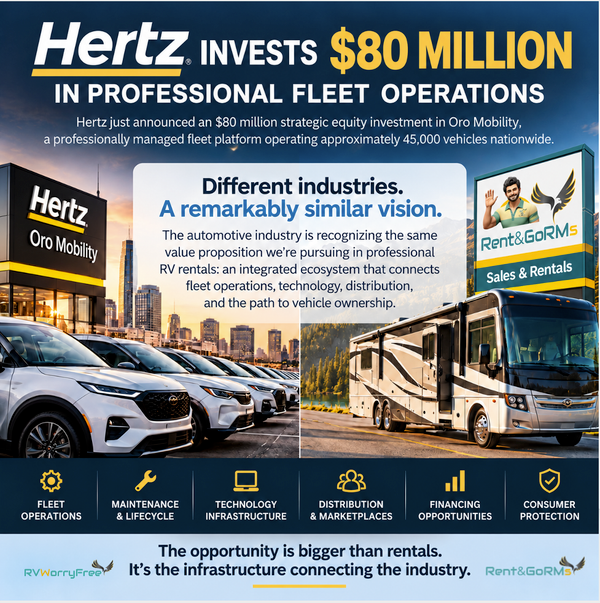
Those capabilities already exist throughout more mature segments of the automotive ecosystem.
The opportunity now is to bring the same level of infrastructure to RV and other specialty motorized rental categories.
Rentals Are the Gateway
Labor Day 2026 gave the RV industry another meaningful signal.
More than 11 million Americans planned an RV trip over one holiday weekend.
Approximately 23 million plan to RV this fall.
And more than 9.4 million people who don't currently own an RV expect to rent or borrow one. (RVIA)
Those consumers are telling us something.
They want the experience.
They may simply want a different path to reach it.
Automotive learned this decades ago.
Consumers did not stop buying cars when leasing became popular.
They gained another way to access them.
They did not stop owning vehicles when daily rentals expanded.
They gained another option.
And they did not stop buying automobiles when companies such as Turo created yet another access model.
The ecosystem expanded.
RV has the opportunity to do the same.
Rental does not have to replace ownership.
It can expand the market that ultimately feeds ownership.
It allows consumers to experience RV travel earlier.
It gives dealers and professional fleet operators a relationship with customers before those customers are ready to purchase.
It creates additional revenue from assets.
And it creates another pathway into an industry looking for the next generation of buyers.
So perhaps the question for the RV industry is no longer:
"Should we be in the rental business?"
Maybe the better question is:
"If millions of future customers are entering the RV lifestyle through rental, who is going to own that relationship?"
Because rentals aren't just a side business.
They're the gateway.
I intentionally kept Rent&GoRMs out of the body. For an industry publication or LinkedIn article, the piece is stronger when the thesis stands on independent market data rather than reading as an advertisement. A short author/footer paragraph can connect it back to RPg and Rent&GoRMs after the conclusion.