Is RV Ownership Dying...?

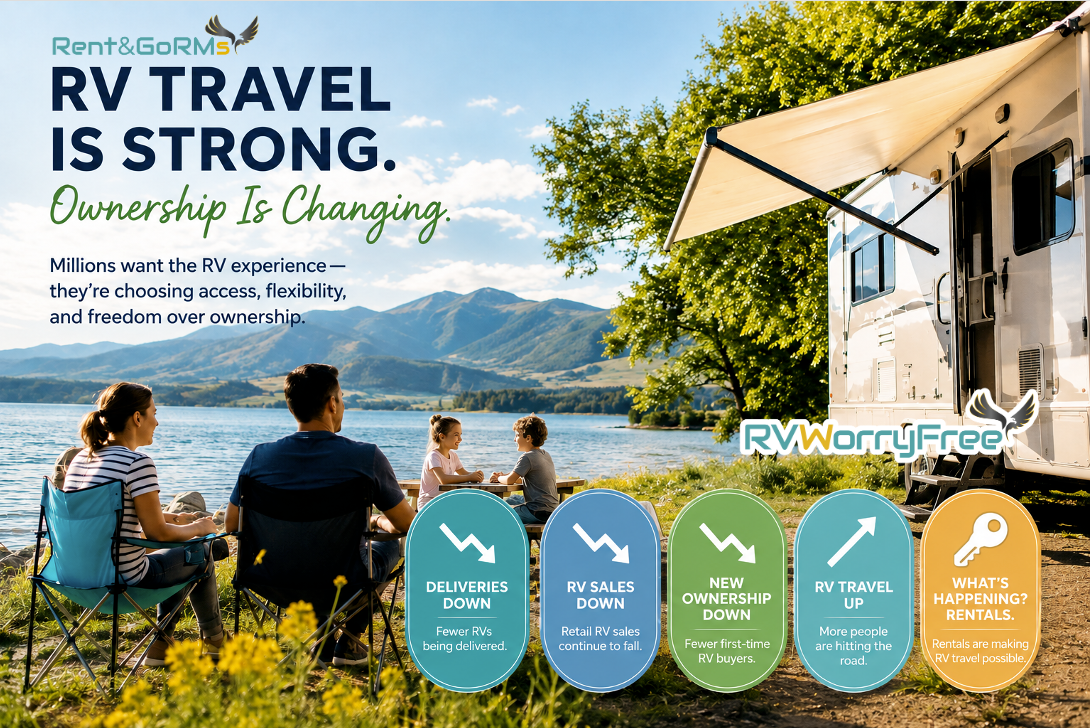
RV Travel Is Strong.
OEM Shipments are Down.
Ownership desire Is Declining.
Dealers Need a Rental Strategy.
RV shipments are down, but Americans are still traveling. The opportunity is moving from ownership alone toward access, rentals, experience, and the complete customer lifecycle.
There are times in every industry when two seemingly conflicting data points actually tell the same story.
The RV industry may be experiencing one of those moments right now.
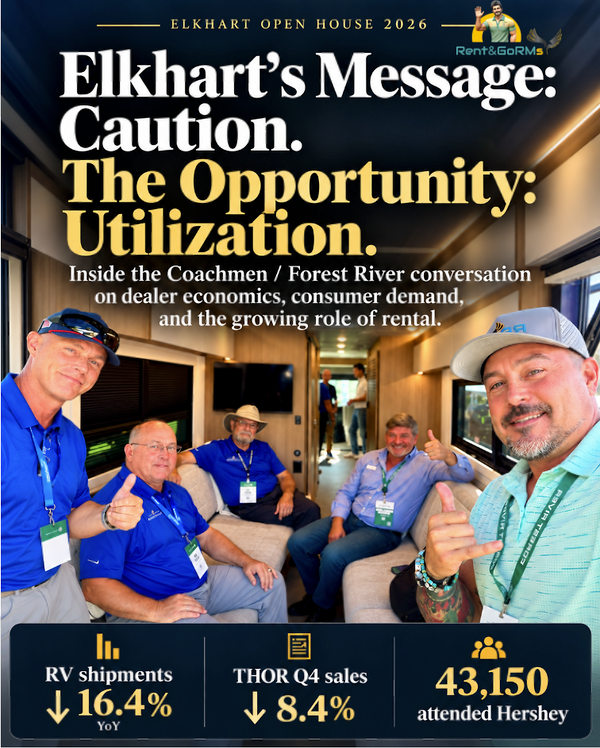
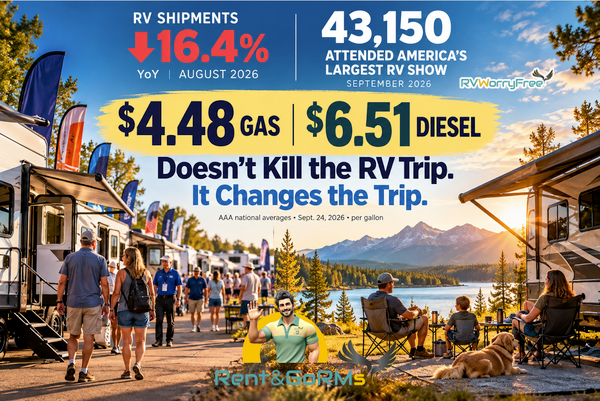
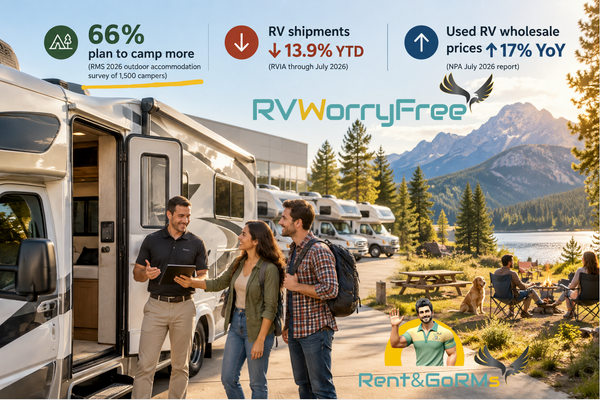
According to the RV Industry Association's July 2026 wholesale shipment report, total RV shipments finished July at 19,948 units, down 11.9% compared with July 2025. Through the first seven months of 2026, total wholesale shipments are down 13.9% year over year. RVIA July 2026 RV Shipment Report
But another piece of research released at virtually the same time tells us something equally important:
Americans have not stopped wanting to RV.
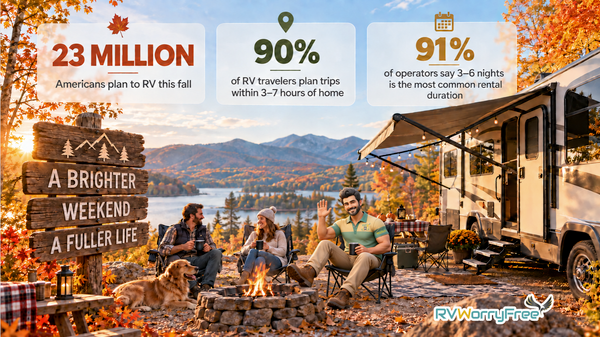
The RV Industry Association's latest Travel Intentions Survey estimates that 23 million Americans plan to take an RV trip this fall.
And perhaps the most important number for RV dealers and professional RV rental operators is this:
More than 9.4 million Americans who do not currently own an RV plan to rent or borrow one for a fall RV trip. RVIA Fall 2026 Travel Intentions Survey
Camper Report also highlighted the findings, including the continued importance of affordability, flexibility, road trips, national parks and outdoor experiences to today's RV traveler. Camper Report: 23 Million Americans Plan Fall RV Trips
Put those numbers together.
RV shipments are down. RV travel demand remains strong.
That should get the industry's attention.
The Customer Isn't Leaving RVing. The Customer Is Changing How They Access It.
For decades, the RV industry's primary business model has understandably centered around ownership.
Manufacture the RV.
Sell the RV.
Finance the RV.
Service the RV.
Sell parts and accessories to the owner.
That business is not disappearing.
But there is now another customer journey developing alongside it.
Access the RV. Experience the RV. Rent the RV. Then potentially buy an RV.
Today's consumer can enjoy the RV lifestyle without immediately accepting the financial and operational responsibilities that come with year-round ownership.
They do not necessarily need to:
- Finance an RV.
- Store it.
- Maintain it throughout the year.
- Insure it year-round.
- Pay for an asset they may only use periodically.
- Commit themselves to one RV type for every type of trip.
Instead, they can choose the RV that fits the experience they want today.
A couple taking a road trip may want a Class B campervan.
A family traveling with children may want a Class C.
A customer attending a festival, race or sporting event may want something different.
A family spending a week at a campground may want a trailer delivered directly to the campsite.
Next month's trip might require something completely different.
That flexibility is one of the fundamental advantages of rental.
Consumers can spend their money on the experience instead of putting all of it into ownership.
More Than 4 in 10 Projected Fall RV Travelers Don't Currently Own an RV
The 9.4 million non-owner number deserves much more attention.
Against the estimated 23 million Americans planning a fall RV trip, it represents more than 40% of projected fall RV travelers who do not currently own an RV and expect to rent or borrow one.
That is not a small fringe of the RV customer base.
That is a meaningful market.
And it creates a question every RV dealer should be asking:
If millions of people want to experience an RV before—or instead of—owning one, who is going to serve them?
The marketplace?
A local independent rental operator?
A national rental company?
Or the local RV dealer who already has the inventory, service department, parts department, trained personnel, consumer trust and potential path to a future RV sale?
That is the opportunity.
Rentals and Ownership Should Not Be Viewed as Competitors
One of the biggest mistakes the RV industry can make is treating the rental customer as somehow less valuable than the ownership customer.
The opposite may be true.
A rental can become the beginning of an entire customer lifecycle.
Rental → Experience → Relationship → Service → Parts → Another Rental → Ownership
The RVIA fall research contains another compelling data point.
Among respondents who said they were likely or very likely to purchase an RV, 35% said they expected to make that purchase within the next three months, compared with 18% two years earlier. RVIA Fall Travel Research
Rentals therefore should not automatically be viewed as replacing ownership.
Rentals can help create future owners.
They allow customers to experience the lifestyle.
They allow families to determine what floorplan works.
They allow consumers to experience the difference between a Class B, Class C, towable or larger motorhome.
They eliminate much of the uncertainty surrounding a major purchase.
That makes rental one of the most natural product demonstrations the RV industry could possibly offer.
Except this product demonstration also produces revenue.
The Broader Travel Trends Point in the Same Direction
This is not a trend appearing in only one survey.
KOA's 2026 camping research describes what it calls an “RV rental renaissance.”
According to KOA, 31% of campers intend to take more trips and spend more nights camping, while nearly half indicate they are likely to rent an RV. KOA also reports particularly strong rental interest among younger campers. KOA: The Camping Trends Defining Travel in 2026
RVshare's 2026 travel research finds another similar pattern.
Its research reports that 64% of surveyed travelers would consider renting an RV for a future trip, a 10-percentage-point increase from the previous year.
Convenience is also changing the rental experience.
RVshare reports that 44% of its bookings opted for RV delivery to a campground or destination, while 72% of vehicles on its platform offer delivery. RVshare 2026 Travel Trend Report
This matters because the future RV renter does not necessarily look like the traditional RV owner.
Some consumers do not want to tow.
Some do not want to drive a large motorhome.
Some simply want to arrive at a campground, open the door and begin their vacation.
The easier we make access to the RV experience, the larger the potential audience becomes.
Campground Demand Is Another Signal the Industry Cannot Ignore
Growing participation creates another challenge: campground capacity.
RVIA continues to advocate for campground modernization and expansion, citing the need for additional infrastructure as new and increasingly diverse consumers participate in RVing. RVIA Campground Modernization and Expansion
Previous RVIA campground market research found that approximately 76% of campsites were booked during the peak June-through-August camping season and specifically identified a need for additional campsites, full hookups, Wi-Fi, pull-through sites and other modern campground amenities. RVIA Campground Industry Market Analysis
The broader economic numbers reinforce the importance of the travel side of this industry.
RVIA's latest economic-impact study estimates that the RV industry generates $159 billion in annual U.S. economic output.
Of that total:
$70 billion comes from RV manufacturers and suppliers.
$38 billion comes from RV sales and service.
And approximately $50 billion comes from RV campgrounds and related travel. RVs Move America Economic Impact Study
That last number matters.
There is enormous economic value created after the RV leaves the dealership.
Even the Shipment Report Contains an Interesting Signal
The July wholesale numbers are clearly softer overall.
But the category data deserves a closer look.
Through July 2026, RVIA reports:
Type B van camper shipments are up 11.6% year to date.
Type C motorhome shipments are up 8.6% year to date.
And total motorhome shipments remain up 5.0% year to date, despite a difficult July comparison. RVIA July 2026 RV Shipment Data
We should be careful not to claim that rental demand is causing those increases. The shipment data does not prove that.
But Class B and Class C motorhomes also happen to be extremely relevant products for the modern rental and experience economy.
That makes these numbers worth watching.
RV Dealers Need to Think Beyond the Initial Sale
For dealers, the opportunity is much larger than simply collecting a rental fee.
A professional rental department can create:
Rental revenue.
Protection-product revenue.
Insurance-related revenue opportunities.
Delivery revenue.
Convenience and ancillary revenue.
Parts revenue.
Service revenue.
Future rental customers.
Future RV buyers.
It can also expose entirely new consumers to the dealership.
Someone who is not ready to spend $80,000, $100,000 or $150,000 on an RV may have no problem spending money to experience one for a weekend or a week.
The rental removes the enormous commitment required to test the lifestyle.
And once that customer discovers that their family loves RV travel, the ownership conversation becomes much easier.
Rentals aren't simply another department. They can become a customer-acquisition strategy for the entire dealership.
Professional Fleet Operators Should Also Ask Who Owns the Customer
The online RV marketplaces deserve credit.
They proved something extremely important:
Consumers will search, select, book and pay for RV rentals online.
They also demonstrated the importance of making the transaction simple.
The customer increasingly expects to be able to look at inventory, see pricing, select the RV, choose options, pay and complete the booking without waiting for someone at the dealership to call them back.
That expectation is not going away.
But professional RV rental fleet operators and dealers now need to ask a second question:
Does the marketplace need to own the entire customer relationship?
If you own the RV…
maintain the RV…
clean the RV…
prepare the RV…
deliver the RV…
check the customer out…
support the customer during the trip…
handle the return…
and accept the operational responsibility…
then you should seriously consider how much of the customer relationship and revenue you are willing to give away.
Marketplaces can be excellent acquisition channels.
But there is a substantial difference between using a marketplace as a channel and allowing the marketplace to become your business.
The professional operator should have the ability to:
Own the customer.
Own the booking.
Own the checkout.
Own the customer data.
Own the protection experience.
Own the communication.
Own the repeat business.
And participate in the revenue created throughout the transaction.
Dealers That Aren't Renting Should Be Paying Attention
For dealers that have not entered rental yet, the data deserves serious consideration.
More than 9.4 million non-RV owners are expected to rent or borrow an RV this fall alone.
Rental interest is increasing.
RV delivery is becoming normal.
Camping participation remains strong.
Consumers increasingly value flexibility and convenience.
And millions of potential RV customers want to experience the lifestyle without immediately becoming owners.
The professional RV dealer may be one of the businesses best positioned to serve them.
You already understand RVs.
You already have technicians.
You already have a service department.
You already have a parts department.
You already have inventory.
You already understand F&I and protection products.
You already know how to build long-term customer relationships.
The missing piece has largely been having the technology, protection products and operating infrastructure designed specifically around professional rentals.
That Is the Problem Renters Protection Group Is Building to Solve
At Renters Protection Group (RPg), we believe the professional motorized rental industry should have the same type of connected technology, protection and revenue infrastructure that sophisticated retail businesses have used for decades.
That starts in RV.
Rent&GoRMs provides modern rental management technology designed for RV dealers and professional rental fleet operators.
The system is designed around the complete rental lifecycle—from online booking and quotes through payments, delivery, digital check-out and check-in, long-term rentals, group bookings and fleet operations.
RVWorryFree Protection Plans bring purpose-built Rental VSCs and protection products directly into the rental transaction, creating additional protection for the renter and new revenue opportunities for the professional operator.
And the RVWorryFree Safety App travels with the renter, helping connect customer support, trip assistance, protection and claims throughout the rental experience.
Together, the goal is simple:
Give professional rental operators control back over their business.
From:
Discover → Book → Protect → Pay → Check Out → Travel → Support → Claim → Return → Repeat
One connected rental ecosystem.
The Market Is Telling Us Where It Is Going
Good business operators learn to watch the curves.
Not simply what happened yesterday.
Not simply what is happening today.
But what consumer behavior is telling us will happen tomorrow.
Right now, several signals are appearing simultaneously.
Wholesale RV shipments have softened.
RV travel demand remains strong.
Millions of non-owners want to rent or borrow RVs.
Younger consumers continue to show strong RV interest.
RV rental consideration is rising.
Delivery is reducing the barrier to entry.
Campgrounds continue looking for ways to expand capacity.
And billions of dollars in economic activity are being created through RV travel after the original vehicle sale.
The conclusion shouldn't be that Americans no longer want RVs.
A better conclusion may be:
Americans increasingly want the RV experience, but they want more choices in how they access it.
Ownership will remain an important part of this industry.
Rental will become an increasingly important part of it too.
And the businesses that connect the two—while owning the customer relationship across rental, protection, service, parts and eventually ownership—may be positioned to capture substantially more customer lifetime value than businesses focused only on the original transaction.
For RV dealers, RV rental fleet operators, professional motorized fleet operators and the broader outdoor hospitality industry, that creates an enormous opportunity.
The marketplace proved the consumer wants to rent.
Now professional operators need the tools to own that customer themselves.
When consumer trends change, good businesses change with them.
The curve is moving.
The question is whether your business is positioned in front of it. Few already are.