Consumer Does Not Mean Ownership

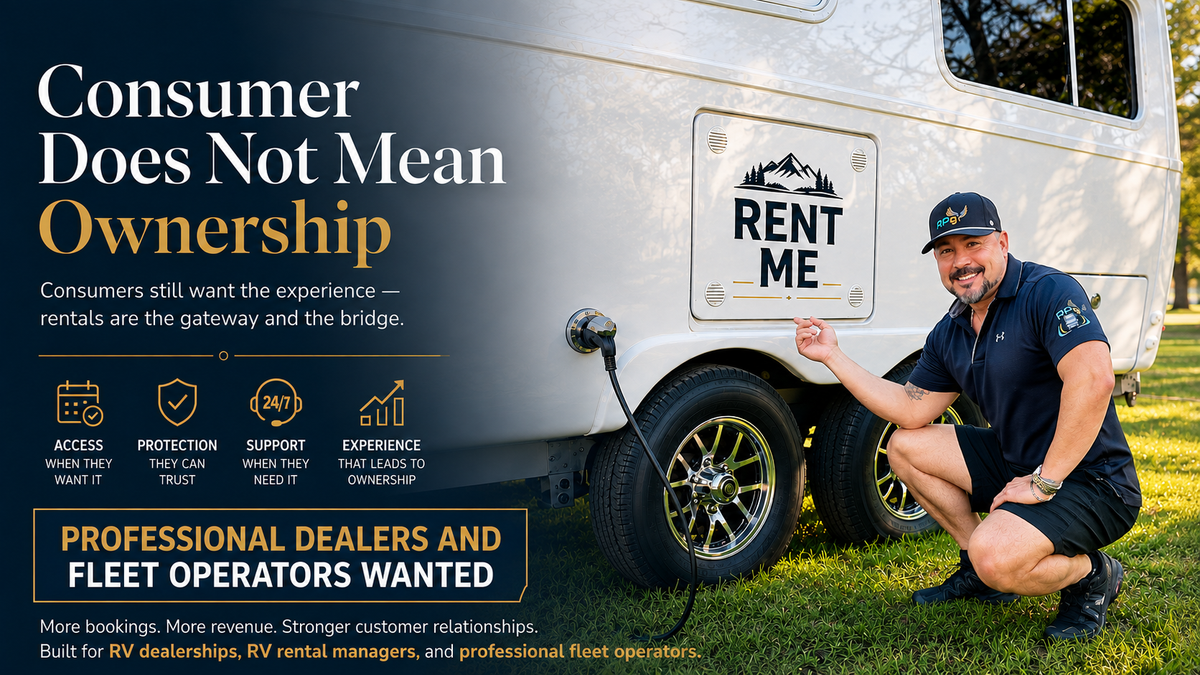
The consumer did not disappear. The owner did.
For decades, much of American retail was built around a simple assumption:
If someone wanted to consume something, eventually they would buy it.
A car. A house. A movie. A boat. An RV. A motorcycle. A vacation property.
Ownership was the destination.
And more importantly, ownership used to have an attainable entry point.
A young person could save through the summer and buy a used car. A family could save for a few years and put a reasonable down payment on a starter home. Someone who loved camping, boating, motorcycles or RV travel could enter the market with a relatively inexpensive product and work their way up.
That ladder has changed dramatically.
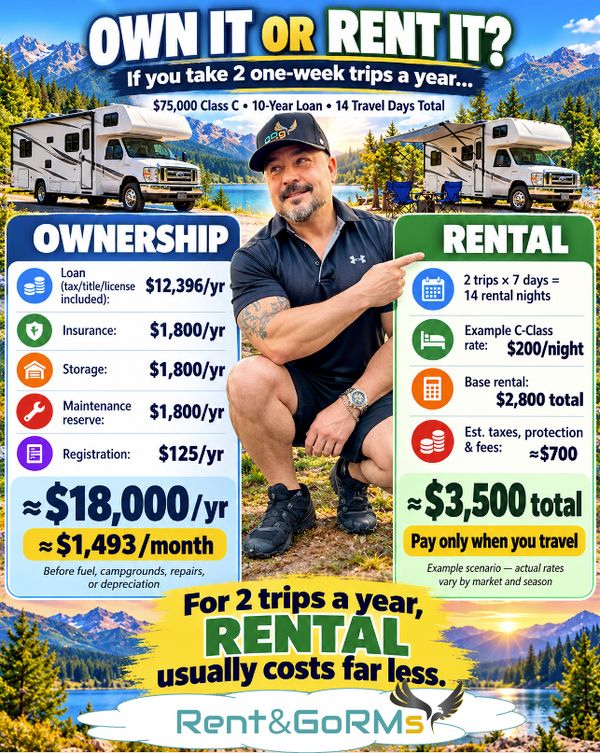
Today, the cost of entry into homeownership, new vehicles, RVs, boats and other discretionary assets has risen sharply. Financing costs remain high. Insurance, storage, maintenance and operating costs have increased as well.
It would be easy for traditional retail industries to look at these pressures and reach the wrong conclusion:
The consumer is disappearing.
They are not.
The consumer is still here.
What changed is the assumption that consuming something requires owning it.
Consumer does not mean owner
This may be one of the most important distinctions retail companies need to understand over the next several years.
Consumption describes use.
Ownership describes possession.
Those are not the same thing.
People still want transportation.
They still want vacations.
They still want the beach house.
They still want to go boating.
They still want to travel in an RV.
They still want adventure, convenience, mobility and experiences.
What is changing is how they access them.
Consumers are increasingly asking a different question than the one traditional retail has spent decades answering.
Not:
“How do I buy this?”
But:
“How do I use this when I want it?”
That distinction changes everything.
We have already watched this happen
Think about how many industries have already separated consumption from ownership.
Consumers wanted movies.
Streaming removed the requirement to own the DVD.
Consumers wanted music.
Streaming removed the requirement to own the CD.
Consumers wanted a vacation home on the beach.
Airbnb helped remove the requirement to buy the beach house.
Consumers needed transportation from the airport or across town.
Rental cars and rideshare platforms removed the requirement to own another vehicle.
In cities across America, someone can walk outside, rent a bicycle or scooter for a short trip and leave it behind when they are finished.
They consumed transportation.
They did not need to own the transportation.
That is not a shrinking consumer economy.
It is a changing consumer economy.
Affordability is accelerating the transition
This shift is not being driven by economics alone.
Convenience matters.
Flexibility matters.
Storage matters.
Maintenance matters.
Insurance matters.
Depreciation matters.
Consumers increasingly understand that ownership comes with obligations long after the original purchase.
A boat has to be stored and maintained.
An RV has to be stored, serviced, insured and cared for.
A second vehicle requires registration, insurance and maintenance whether it is being used or not.
A vacation property comes with taxes, repairs, utilities and year-round responsibility.
Rental changes the equation.
Instead of purchasing the asset, the consumer purchases access to the experience the asset provides.
And for many newer consumers entering the market, that may not merely be the affordable option.
It may be the preferred option.
They may prefer to rent the car to go to the airport.
Rent the house on the beach.
Rent the scooter to move around town.
Rent the boat for the weekend.
Rent the RV for the family vacation.
Use it.
Enjoy it.
Return it.
And move on without the long-term obligation of storing, maintaining, financing and insuring something they may only use several times a year.
Rentals are the gateway — and the bridge
This is why the rental industry is far more important than many traditional retailers realize.
Rental is the gateway that allows a consumer into a market they may otherwise be unable or unwilling to enter.
But rental is also the bridge.
It connects desire to experience.
It connects a consumer who cannot justify purchasing a $60,000, $80,000 or $150,000 recreational product with the experience that product provides.
And sometimes that rental ultimately creates an owner.
Someone rents an RV several times, falls in love with the lifestyle and eventually buys one.
Someone rents a boat throughout the summer and decides ownership makes sense.
Someone rents a particular vehicle and later purchases that model.
Rental therefore does not have to compete with retail.
Done correctly, rental feeds retail.
It gives consumers an affordable entry point into an industry.
It creates product exposure.
It creates qualified prospects.
It gives manufacturers and dealers another way to put inventory into consumers' hands.
And it allows an asset to generate revenue many times before its eventual retail sale.
What this means for RV dealerships
For RV dealerships, the opportunity is significant.
The dealership of the future may not simply ask:
“How many RVs did we sell this month?”
It may also ask:
“How many consumers experienced our products this month?”
That distinction matters.
An RV dealership with a professional rental operation can create a new entry point for consumers who may not yet be ready to purchase an RV.
Instead of losing that customer because financing, affordability or ownership does not make sense today, the dealership can offer access through an RV rental.
That renter can become:
A repeat customer.
A service customer.
A parts and accessories customer.
A protection-product customer.
A referral source.
And eventually, an RV buyer.
Rental gives RV dealers the ability to stay in front of consumers who are interested in the lifestyle but are not yet prepared to become owners.
What this means for RV fleet operators and RV rental managers
For RV fleet operators, RV rental managers and professional RV rental companies, the opportunity is equally important.
As more consumers choose access instead of immediate ownership, professional rental fleets have the opportunity to capture more demand.
But only if they operate like modern retail businesses.
That requires more than putting inventory on a third-party marketplace.
Professional RV rental operators need the ability to control:
Their customers.
Their pricing.
Their booking process.
Their inventory.
Their payments.
Their protection products.
Their insurance options.
Their check-in and checkout procedures.
Their claims.
Their fleet utilization.
Their customer data.
And their long-term customer relationships.
The businesses that control those elements control much more than a reservation.
They control the consumer relationship.
What this means for the broader motorized rental industry
The same shift extends far beyond RVs.
It applies to motorized rental fleets, powersports rental businesses, boat and marine rental fleets, motorcycle rentals, exotic and specialty vehicle rentals, trailer and equipment rental businesses, and other professional rental operators.
Consumers increasingly want access to the experience without assuming all of the obligations of ownership.
That changes the value of the asset itself.
A vehicle, boat, RV, motorcycle or piece of equipment is no longer simply something that is purchased once and sold once.
It can become a recurring revenue-producing asset that serves dozens — and potentially hundreds — of consumers throughout its useful life.
That is a major shift.
For RV dealerships, rental can become the bridge between today's renter and tomorrow's owner.
For RV fleet operators, every unit can become a recurring revenue source.
For RV rental managers, operating efficiency and customer experience become competitive advantages.
For broader rental fleet operators, utilization, protection products, ancillary revenue and customer retention become increasingly important.
And for manufacturers, dealers and professional fleet operators, rental can create an entirely new customer-acquisition channel.
Rental is not simply an alternative to retail
This is where many traditional businesses may make a mistake.
They may look at rentals as a side business.
A secondary channel.
Something separate from retail.
That thinking is becoming outdated.
Rental can become one of retail's strongest customer-acquisition channels.
It allows a consumer to experience the product before they are prepared to purchase it.
It keeps the customer inside the industry's ecosystem.
It creates familiarity with the brand.
It generates service and ancillary revenue.
It creates first-party customer data.
And it creates a natural pathway from renter to buyer.
The companies that understand this will not have to choose between rentals and sales.
They will build a system where each supports the other.
Professional rental businesses need professional infrastructure
This changing market creates opportunity, but it also raises the standard.
Professional rental operations need more than basic booking software.
They need a connected operating ecosystem.
Online booking.
Fleet management.
Digital check-in and checkout.
Customer verification.
Payments.
Protection products.
Renter insurance.
Roadside support.
Safety tools.
Claims management.
Delivery management.
Long-term rentals.
Group bookings.
Customer communication.
Reporting.
And the ability to turn today's renter into tomorrow's buyer.
That is why Rent&GoRMS, RV Worry Free and Renters Protection Group are being built around professional RV rental operators, RV dealerships and broader motorized rental fleets.
Rent&GoRMS provides the rental management infrastructure.
RV Worry Free and Renters Protection Group provide the protection, roadside, safety and revenue infrastructure surrounding the rental transaction.
The goal is not simply to help a business rent another unit.
The goal is to help professional rental operators build sustainable, scalable businesses around the way consumers increasingly want to consume.
The retail industry has a choice
Traditional retail businesses can spend the next several years waiting for yesterday's consumer to return.
Or they can build for today's consumer.
The opportunity is not to abandon ownership.
Ownership will remain important.
The opportunity is to stop requiring ownership as the only way someone can become your customer.
That means meeting consumers where they are.
If they want to buy, give them an exceptional ownership experience.
If they want to rent, give them an exceptional rental experience.
If they want to rent today and buy three years from now, make sure your business is part of both transactions.
The next three to four years will matter
Every major shift creates companies that defend the old model and companies that adapt early to the new one.
The companies that understand this transition first will have an enormous advantage.
Because the consumer is not gone.
They are standing right in front of us.
They still want the car.
They still want the boat.
They still want the RV.
They still want the house on the beach.
They still want the experience.
They simply may not want — or be able — to own it.
Our job is to stop forcing consumers into yesterday's definition of consumption.
Meet them where they are.
Give them an easy way to access what they want.
Protect the transaction.
Make the experience simple.
Build a relationship with them.
And when ownership eventually makes sense, be the company they already know and trust.
Consumer does not mean ownership.
And the businesses that understand that distinction may define the next era of retail.
Eo Sparks *Founder / CEO