RV Rental Strategy 2026: Why Financing Resistance Creates an Opportunity for RV Dealers

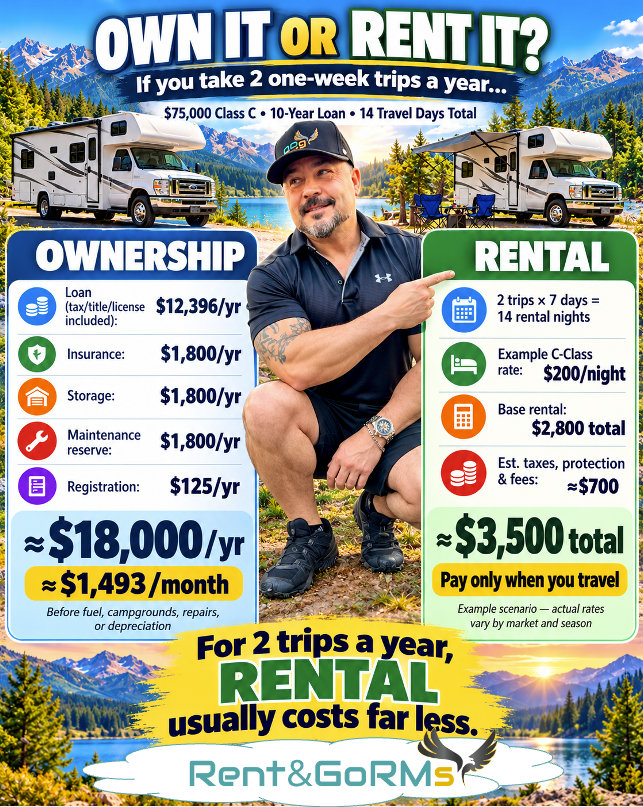
Only 14% of consumers say borrowing for a major purchase is acceptable today. Discover how RV dealers can use professional rentals to generate revenue, improve fleet utilization and develop future buyers.
When Buyers Resist the Loan, Don't Lose the Customer.
New consumer research shows just 14% of Americans surveyed believe it's a good time for them to borrow for a major purchase. Meanwhile, millions still plan to experience RV travel without owning one. Is the RV industry missing a transaction?
For decades, the RV industry has operated around one primary objective: sell the RV.
Manufacturers build them. Dealers stock them. Sales teams market them. Finance departments arrange the purchase.
But what happens when the consumer still wants the experience and no longer wants the financial commitment?
That question became considerably more relevant this week.
On October 9, the University of Michigan released a consumer spending report based on 3,492 interviews conducted between June 23 and September 21, 2026.
The findings deserve the attention of every RV dealership owner, RV rental company owner and manufacturer.
Only 14% of consumers surveyed believed it was acceptable to use credit for a major purchase under their current financial circumstances.
Just 24% felt comfortable using savings for a major purchase.
And when asked about spending on products experiencing particularly large price increases, 54% expected to cut back, while another 16% planned to stop purchasing those items.
These are national consumer spending attitudes, not RV-specific purchase intentions. The 14% figure is also similar to the 15% recorded in 2025 and 14% in 2022. It reflects persistent borrowing reluctance rather than a sudden new collapse.
Nevertheless, the implications for an industry built around financing expensive recreational assets are substantial. Surveys of Consumers
University of Michigan — October 9 Consumer Spending Report
The Consumer May Still Want the Experience
Here is where the data gets interesting.
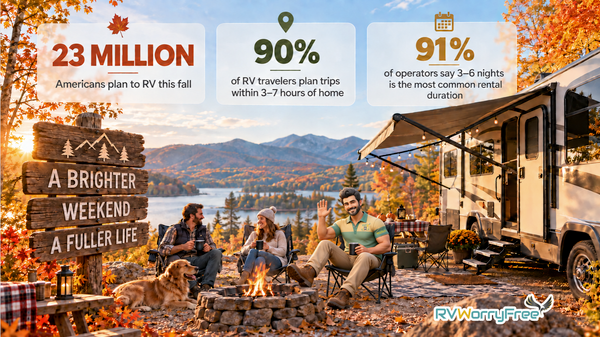
In August, the RV Industry Association reported that approximately 23 million Americans intended to take an RV trip this fall.
More importantly, 9.4 million Americans who did not own an RV planned to rent or borrow one.
These are survey-based travel intentions, not confirmed rental bookings. They also do not establish how many respondents ultimately traveled.
But they demonstrate something important.
A substantial group of consumers is interested in experiencing RV travel without first purchasing an RV. RVIA
RVIA — Fall 2026 RV Travel Intentions
For a dealership, that should raise a fundamental question.
Why are we treating ownership as the first transaction when millions of potential customers are interested in access?
The Market Is Sending Two Different Signals
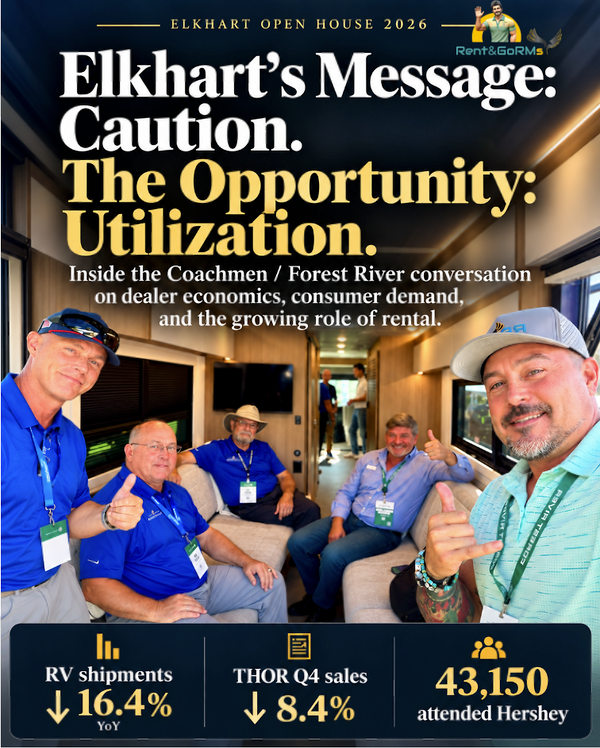
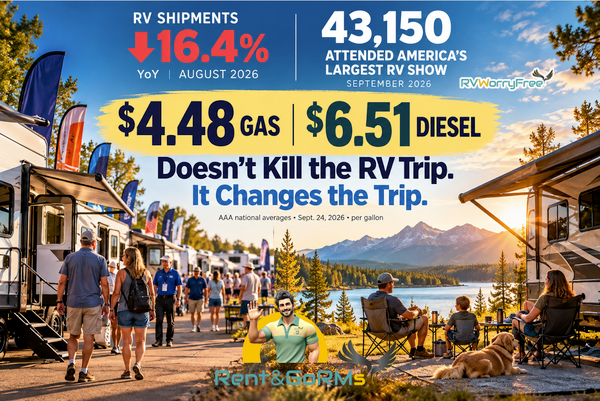
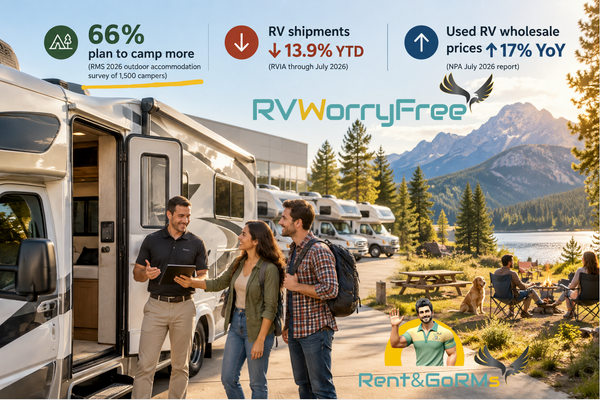
The latest wholesale shipment figures show manufacturers shipped 23,599 RVs in August, down 16.4% year over year.
Through August, shipments totaled 207,191 units, a 14.2% decline from the comparable period in 2025.
Those are manufacturer wholesale shipments, not retail sales. They indicate pressure on new-unit distribution but cannot independently establish how many consumers abandoned a purchase. RVIA
Meanwhile, the National Park Service reported that Yellowstone National Park welcomed 868,450 recreational visits in September, an increase of 3% over September 2025.
Year-to-date visitation remained 1% below last year.
That is not proof that camping or RV rental demand is increasing nationally. It is evidence that significant outdoor travel activity continues despite economic pressure. National Park Service
The distinction matters.
A consumer who doesn't purchase an RV is not necessarily a consumer who doesn't want to go RVing.
Those are two different decisions.
And the RV industry needs better ways to serve both.
Rental Can Become the First Transaction, Not the Last Resort
Think about the traditional dealership experience.
A family walks through a beautiful new Class C motorhome.
They love the floorplan.
They picture the kids traveling together, visiting national parks and spending weekends at campgrounds.
Then the conversation turns to financing.
The payment becomes real.
Insurance becomes real.
Storage, maintenance, fuel and depreciation become real.
The family decides to wait.
What happens next?
In most traditional dealerships, that customer leaves without completing a transaction.
But what if the salesperson could say:
"Why don't you take one out next weekend and experience it first?"
Now the dealership has another opportunity.
The customer becomes a renter.
The dealership generates rental revenue.
The family experiences the product in the real world.
And the dealership maintains a relationship with a potential future buyer.
That does not guarantee an eventual retail sale. Reliable industry-wide renter-to-buyer conversion rates remain limited.
But it creates an opportunity that otherwise may not exist.
Professional RV rental can become a customer-acquisition strategy rather than simply another department.
The Economics of Inventory Need to Change
This becomes even more important when we consider what is happening in the pre-owned market.
The October 2026 report from National Powersport Auctions found that average wholesale RV and camper prices were running 23% above year-earlier levels.
The report also noted seasonal price softening and continued buyer interest in clean, well-maintained pre-owned inventory.
That 23% figure represents average wholesale prices in the company's auction data. It does not establish that comparable individual RVs appreciated by 23%, because changes in vehicle mix and condition can affect averages. NP Auctions
NPA — October 2026 Pre-Owned RV Report
For an RV dealership owner, this creates an interesting strategic possibility.
Instead of measuring inventory performance exclusively by how quickly a unit sells, consider the total economic value generated throughout its lifecycle.
A properly selected unit could potentially move through several stages:
New RV inventory → Professional rental fleet → Rental revenue → Maintenance and service → Pre-owned inventory → Retail sale.
Each stage represents an opportunity to create value.
Rental revenue can help offset ownership and carrying costs.
Customers experience the manufacturer's products.
Maintenance records create documentation for eventual resale.
And the dealership retains another potential sales opportunity.
However, rental is not automatically more profitable than immediate retail.
The dealership must account for depreciation, financing, insurance, maintenance, damage exposure, cleaning, operating labor and resale value.
The objective is not simply to put more RVs into rental fleets.
It is to generate a better total return on each asset.
Professional RV Rental Requires Professional Fleet Management
There is an operational challenge here that dealers cannot ignore.
Rental is not simply another way to sell an RV.
It is an entirely different operating discipline.
An RV dealership rental department needs the ability to manage reservations, payments, agreements, renter verification, insurance, protection products, check-in and checkout, condition documentation, maintenance, roadside assistance and claims.
For an RV rental manager or RV fleet manager, these activities directly affect profitability.
Every additional hour spent processing a booking, preparing a unit or resolving a preventable issue reduces the financial contribution of that rental.
That is why modern RV rental software and RV rental management software should do more than maintain an availability calendar.
A professional RV rental operation needs to connect the entire customer journey while providing meaningful financial visibility.
For the RV dealership manager, the key performance indicators should include fleet utilization, revenue per available rental day, rental contribution margin, maintenance cost, ancillary revenue and eventual resale performance.
For the dealership owner, the most important question is straightforward:
Did putting this RV into rental service improve our total financial return compared with selling it immediately?
That is the calculation that determines whether the strategy works.
The Customer Journey Is Already Changing
There is another development worth watching.
RVshare is currently promoting eligible RV deliveries through a $100 gift-card rebate for qualifying reservations during its August 17–October 17 promotional period.
The promotion emphasizes campground delivery, weekend trips and convenient RV experiences.
This does not prove delivery bookings are increasing.
But it does show a major rental marketplace actively marketing convenience and destination delivery as reasons to choose an RV experience. RVshare
That matters for professional fleet operators.
Some consumers may prefer having an RV delivered directly to a campground rather than driving a large motorhome.
Others may prefer a shorter regional trip instead of an extended cross-country vacation.
For a rental business, those preferences create opportunities to develop campground partnerships, delivery services, shorter rental packages and destination-based experiences.
They also reinforce the importance of understanding what customers are actually purchasing.
Sometimes it is the vehicle.
Sometimes it is the convenience.
Often, it is the experience.
Manufacturers Have an Opportunity Beyond the First Sale
The implications extend beyond the dealership.
Imagine a manufacturer working with selected dealers to place new RV inventory into professionally managed rental fleets.
The units generate revenue while introducing consumers to current products and floorplans.
Maintenance and mileage are documented throughout the rental period.
After a defined operating cycle, qualifying units move into pre-owned inventory for eventual retail sale.
The manufacturer gains product exposure.
The dealer gains another potential revenue stream.
The customer gains access to the experience without immediately committing to ownership.
And the industry creates another path into the RV lifestyle.
This is a proposed business model, not a claim that manufacturers have broadly adopted such programs.
But it is a model worth testing.
The same underlying strategy may eventually apply to marine, powersports, trailers and other expensive motorized recreational assets.
Stop Treating "Not Ready to Buy" as "Not Interested"
The latest consumer research does not prove that RV rental demand is surging.
It does not prove that every renter will become a buyer.
And it does not prove that putting every dealership unit into rental service makes financial sense.
What it does establish is that consumers remain highly cautious about financing major purchases.
At the same time, millions of Americans continue to express interest in RV travel without ownership.
That gap deserves attention.
For decades, the RV industry has invested heavily in finding customers who are ready to purchase.
Perhaps it is time to invest equally in serving customers who are ready to experience.
Because the family that is not ready to finance an RV today may still be ready to take a trip this weekend.
And that transaction has value.
Rental revenue.
Customer relationships.
Fleet utilization.
Product exposure.
Potential future sales.
The opportunity is not to replace RV ownership with rental.
It is to connect rental and ownership into one customer journey.
The next generation of successful RV dealerships may not simply be the ones that sell the most units.
They may be the ones that create the most value from every unit—and every customer—throughout the entire lifecycle.
When buyers resist the loan, don't lose the customer.
Give them another way to experience the product.
Eo Sparks Founder/CEO